As a business owner, you’re the top expert on your company’s products and services. An expert on controlling a balance sheet? Umm… not so much. Yet, knowing the back-office like the back of your hand is essential to running a thriving organisation. Understanding the types of bookkeeping accounts and how transactions are recorded helps you better plan for business growth.
Is the language of the back-office a bit daunting? Don’t be scared off. Learn the basics of bookkeeping terms and the main methods of accounting. Once you better understand your accounting practices, you can read your business’s financial health with confidence.
Basics of bookkeeping
Even creative executives should know basic practices. Budgets for social media, marketing and advertising will be informed by available funds, after all. You’ll hear these fundamental terms in any bookkeeping meeting worth its salt. Every account in your books belongs to one of five types: assets, liabilities, equity, revenue (income) and expenses. Here is what the key terms mean.
- Accounts payable: Your accounts payable includes any amounts owed to a supplier or other business. If you have received a good or service but not yet paid for it, your supplier’s invoice goes into your accounts payable. It is a liability, not an asset.
- Accounts receivable: These are invoices that reflect money owed to your business. In short: unpaid bills from customers or clients. It is an asset.
- Assets: Assets are what your business owns or is owed, including cash at bank, accounts receivable, inventory, and property and equipment.
- Liabilities: Your liabilities are what your business owes, such as accounts payable, bank loans, wages and super owed to employees (payroll liabilities), GST and PAYG withholding owed to the ATO, and credit card balances.
- Equity: The owners’ stake in the business: what is left when you subtract liabilities from assets.
- Revenue: The income your business earns from selling its goods and services.
- Expenses: The costs of running your business and selling your goods and services, from utilities and cleaning to salaries and insurance.

Accounting methods and bookkeeping systems
The five account types above are the categories every transaction is sorted into. Separately, you choose when to record transactions (cash or accrual basis) and how to record them (single-entry or double-entry). These are two different choices, so it helps to understand both.
- Cash basis accounting: Under this method, you only record a transaction when the cash actually changes hands. Cash basis accounting is simple and suits many small businesses. For GST, businesses with aggregated turnover under $10 million can choose to account on a cash basis.
- Accrual basis accounting: When your business uses accrual basis accounting, you recognise revenue when or as you satisfy the relevant performance obligation, and expenses when incurred, regardless of invoice or payment timing. Unbilled work may create a contract asset or receivable, advance billings may create a liability, and costs incurred before a bill arrives may require an accrual.
- Single-entry bookkeeping: In single-entry bookkeeping, you record each transaction once, like a cash book. For instance, if you make a sale of $100, you simply record $100 of income.
- Double-entry bookkeeping: In a double-entry system, every transaction is recorded in at least two accounts, with debits equal to credits. For instance, when you invoice a client $100 for a service, you debit accounts receivable $100 and credit revenue $100. When the client pays, you debit your bank account $100 and credit accounts receivable $100. (If you are registered for GST, the GST portion is recorded separately as a liability.) Double-entry bookkeeping keeps your books in balance, and it is how modern accounting software works.
Other bookkeeping terms you need to know
- Cash flow: The money coming into and going out of your business. Whichever accounting method you use, you need to track cash flow, because a profitable business can still run short of cash.
- Cost of goods sold (COGS): The direct cost of the products you sell, such as materials, direct labour and production costs.
- Owners’ equity: If you take total assets and subtract total liabilities, you get the book value of the owners’ stake.
- Balance sheet: A balance sheet lists assets, liabilities and owners’ equity. It provides a snapshot of your financial position on a particular date, including your net assets.
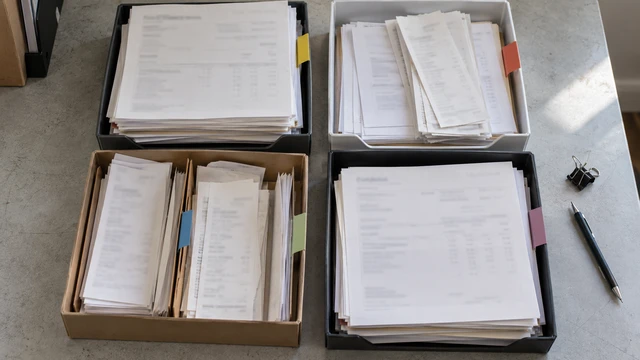
- Manual bookkeeping: Records kept on paper. The Australian Taxation Office requires you to keep most business records for five years, in English or in a form that can be easily converted.
- Cloud bookkeeping: Electronic records, usually produced using bookkeeping software. The same five-year rule applies, and electronic records are fine as long as the ATO can access and understand them. Companies also need to keep financial records for seven years under the Corporations Act.
Running your business can often remove you from the day-to-day accounting processes of your organisation. But knowing your way around a balance sheet helps you track growth and know when it’s time to scale. Visory runs bookkeeping, payroll, accounts payable and accounts receivable for growing businesses, with a dedicated team that does the heavy lifting of record keeping. Visory Insights and a Business Performance Partner then explain what the numbers mean. See how Visory works in practice, or, if you are in Victoria, see Visory’s bookkeeping services in Melbourne.
About this article
Written by The Visory Team. Published . General information for Australian businesses, not advice for your situation.