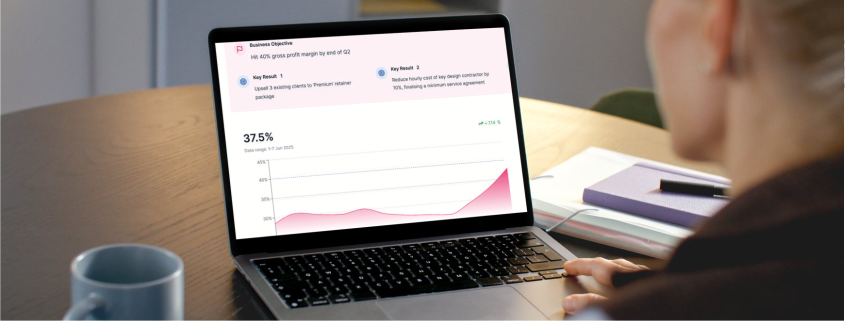

Business reporting is the process of communicating financial and operational information about a business to the people who rely on it: owners, managers, lenders, investors and government agencies. Much of it is presented in financial statements, which show a business’s financial performance over a period of time and its position at a point in time.
It helps to separate two kinds of reporting. Compliance reporting is what you must lodge with government, such as business activity statements (BAS), Single Touch Payroll (STP) reports and tax returns to the Australian Taxation Office (ATO), and, for some companies, reports to the Australian Securities and Investments Commission (ASIC). Management reporting is what you prepare for yourself: monthly profit and loss, balance sheet, cash flow and the KPIs you use to run the business. Management reporting is optional, but it is what helps owners and managers make informed decisions and spot risks early.
This guide covers Standard Business Reporting (SBR), the government standard behind much of your compliance reporting, the reports most businesses need, and how to streamline them.
What is Standard Business Reporting (SBR)?
Standard Business Reporting (SBR) is a standard approach to digital record-keeping and reporting that the Australian Government introduced in 2010 to simplify business reporting obligations. The Australian Business Register (ABR) program is responsible for it.
SBR is not a website you log in to. Software developers build SBR rules into business and accounting software to make it “SBR-enabled”. When a report is due, SBR-enabled software knows what information is needed, fills it out from the records you already keep, and sends it to the government agency.
SBR is the primary channel for ATO lodgments from business software and for SuperStream superannuation transactions. The agencies participating in SBR are the ATO, ASIC and the Australian Prudential Regulation Authority (APRA). State and territory revenue offices no longer participate, so payroll tax returns are lodged through each state or territory revenue office’s own system.
In practice, if you lodge your BAS or STP reports straight from accounting or payroll software such as Xero, MYOB, QuickBooks Online or Reckon, you are already using SBR. The only cost is the software itself.
What are the benefits of using Standard Business Reporting?
The benefits of using SBR-enabled software include:
- Less time on compliance: reports are filled out from information you already record in your software, so you spend less time collating information and filling in forms.
- Fewer errors: because figures come straight from your bookkeeping and payroll records, there is less re-keying and less risk of mistakes in what you report.
- Consistency: SBR uses a standard dictionary of reporting terms, so software and government agencies interpret the data in the same way.
- Less paperwork: you lodge electronically instead of completing paper forms.
- Greater efficiency: electronic lodgment reduces the time and resources needed to meet your reporting obligations, leaving more time to run the business.
What are the most important business reports to prepare?
Which reports you need depends on your business structure, size and activities. The most common are:
- Annual financial statements: financial reports that summarise the business’s financial performance and position for the year. They underpin your tax return. Most small proprietary companies don’t have to lodge them with ASIC, but large proprietary companies generally must lodge audited reports.
- Business activity statements: if you are registered for GST, or have PAYG withholding or instalment obligations, you lodge an activity statement (a BAS, or an IAS for some monthly withholders) monthly, quarterly or, in some cases, annually, to report GST and, where relevant, PAYG withholding and PAYG instalments.
- Payroll reports: employers report each employee’s pay, tax withheld and super to the ATO through Single Touch Payroll on or before each payday, and finalise STP data by 14 July each year.
- Tax returns: an annual income tax return reporting the business’s income and deductions.
- Management reports: monthly or quarterly profit and loss, balance sheet, cash flow and KPI reports for your own decision-making. These are not lodged with anyone, but they are often the reports that make the biggest difference to how the business performs.
- Other reports: depending on your industry and size, you may have other obligations, such as a taxable payments annual report (TPAR) or state payroll tax returns.
These are just some of the reports a business may need to prepare.
How can you streamline your reporting?
There are several ways you can streamline your business reporting:
- Use SBR-enabled accounting and payroll software: lodging BAS and STP reports directly from your software saves re-keying and reduces the risk of errors.
- Use the ATO’s online services: Online services for business lets you view, lodge and pay activity statements and manage your tax accounts.
- Use a registered agent: a registered BAS agent can prepare and lodge your BAS and payroll reports, and a registered tax agent can also prepare your tax return and advise on your obligations. Agents may also have access to later lodgment dates.
- Keep accurate records: keeping accurate, up-to-date records of your business transactions simplifies reporting and helps you avoid penalties for errors. Most business tax records must be kept for 5 years.
- Lodge your reports on time: lodgment deadlines depend on the type of report and your obligations. A quarterly BAS is generally due 28 days after the quarter ends (28 February for the October to December quarter), with extra time if you lodge online or through a registered agent. Lodging late can attract failure-to-lodge penalties from the ATO.
- Review your reports regularly: reviewing your management reports each month helps you catch errors early and act on what the numbers are telling you.
These government websites have more information on SBR, the ATO’s online services and your reporting obligations:
- The Standard Business Reporting website
- The ATO website
- Business activity statement (business.gov.au)
Conclusion
Business reporting is a vital part of running a business. Compliance reporting keeps you on the right side of the ATO and other agencies, and SBR-enabled software, the ATO’s online services and a registered agent can all make it easier. Accurate records and on-time lodgment help you avoid penalties. Reviewing your management reports regularly turns the same records into better decisions.
Need help with your business reporting?
Visory runs bookkeeping, payroll, accounts payable and receivable for growing businesses, with a dedicated team and our AI, Delphi, overseen by that team. That keeps your records current for your BAS and payroll reporting. With Visory Insights, a Business Performance Partner walks you through a plain-English monthly read of the numbers and helps turn them into decisions.
Book a discovery call to see how Visory could support your business reporting.
About this article
Written by The Visory Team. Published . General information for Australian businesses, not advice for your situation.